
Search Alaska Civil Court Records
Alaska civil court records document non-criminal legal proceedings filed across the state's trial courts. These records cover personal injury claims, contract disputes, property cases, domestic relations matters, probate filings, and more. The Alaska Court System maintains public access through CourtView, a free online search tool open to anyone. You can look up civil court records by party name or case number from Superior Courts and District Courts across all four judicial districts. For certified copies or full case documents, contact the clerk of court in the borough or census area where the case was filed.
Alaska Civil Court Records Overview
What Alaska Civil Court Records Are
The Alaska Court System's official website is the starting point for any civil records search in the state. It lists court locations, filing options, forms, and public access tools for all trial courts statewide.
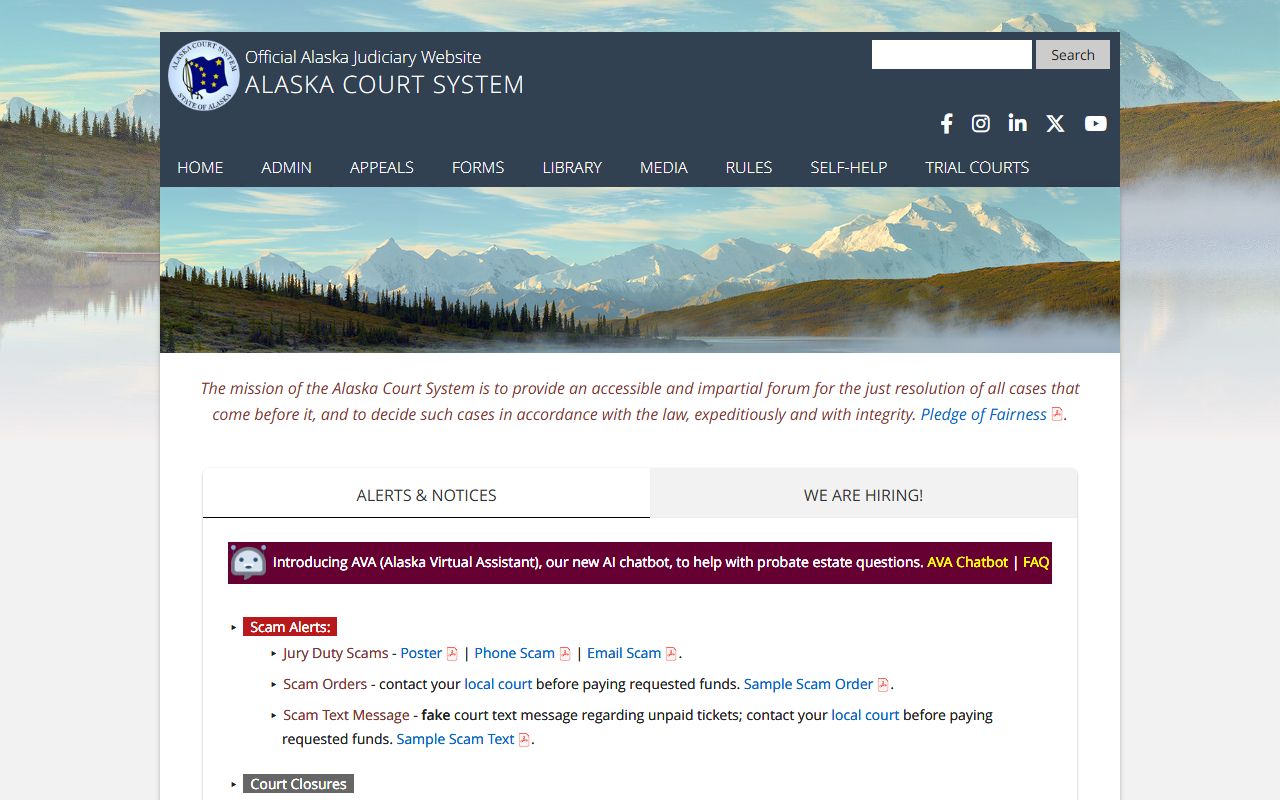
The Alaska Court System serves as the central hub for all civil court filings across the state's boroughs and census areas.
Alaska civil court records are legal documents created when a lawsuit is filed in state court. They cover the full range of non-criminal disputes. Courts handle things like breach of contract cases, negligence claims, personal injury lawsuits, restraining order petitions, property condemnation disputes, defamation cases, and family law proceedings. Any case that is not a criminal prosecution falls under civil court jurisdiction. Those case files become public records under Alaska law once they are filed. The record exists regardless of how the case ends, whether by judgment, settlement, dismissal, or other outcome.
Each civil case file holds a set of documents. You will find the original complaint, any answers filed by the defendant, motions, court orders, and the final judgment. If the case went to trial, there may also be transcripts and detailed findings of fact. Civil records show party names, filing dates, case type, the presiding judge, and the disposition. The full text of every document is not available online, but the public index through CourtView gives you case details and the docket history.
Not every case appears in the public index. Under Alaska Rules of Court, Administrative Rule 40(a), certain cases are removed from public view. Sealed records, cases involving minors, domestic violence protective orders filed under AS 18.66.140, and cases dismissed at initial hearing for lack of evidence are kept out of the public database. If you cannot find a case on CourtView, it may be sealed or restricted. The clerk's office can confirm whether a record exists but is not listed publicly.
How to Search Alaska Civil Court Records Online
The Alaska Court System case search portal provides two main tools: CourtView for trial court cases and the Appellate Case Management System for appeals. Both are free and open to the public.
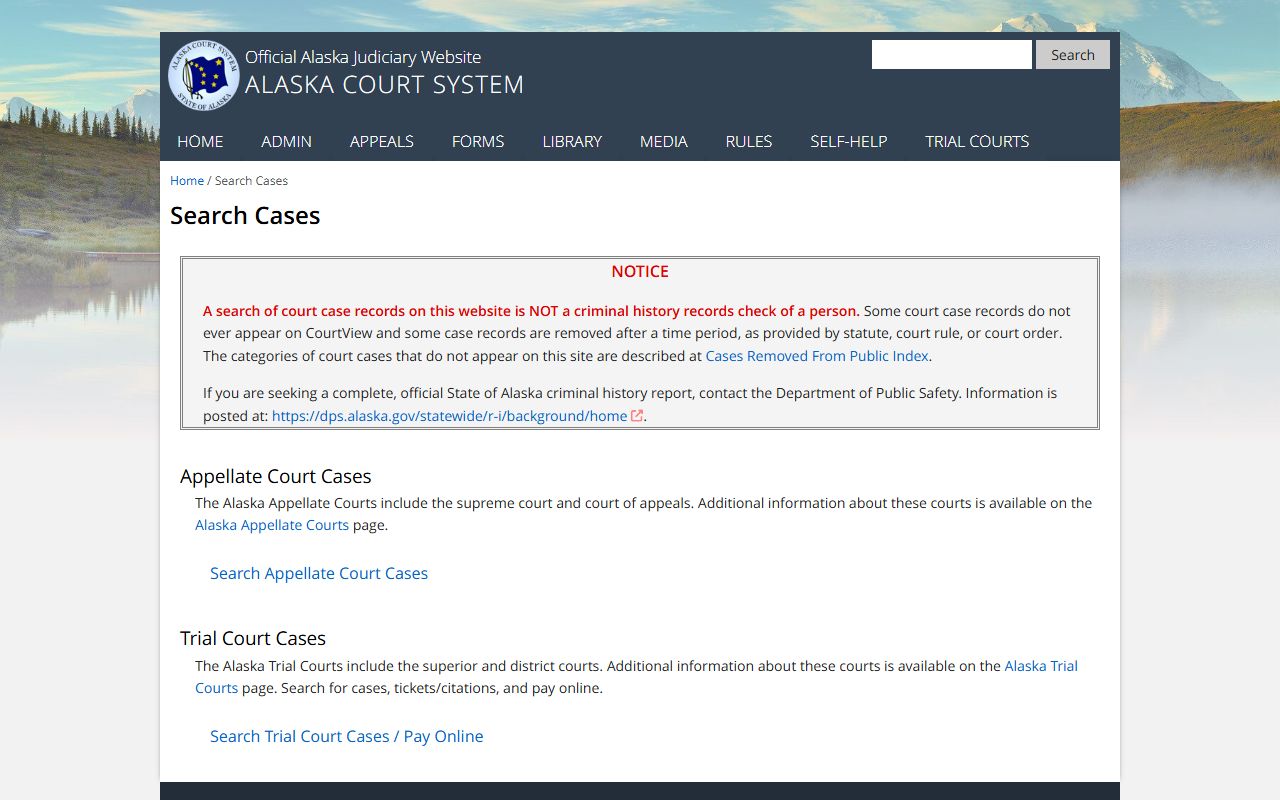
CourtView covers Superior Court and District Court cases filed across all four judicial districts in Alaska.
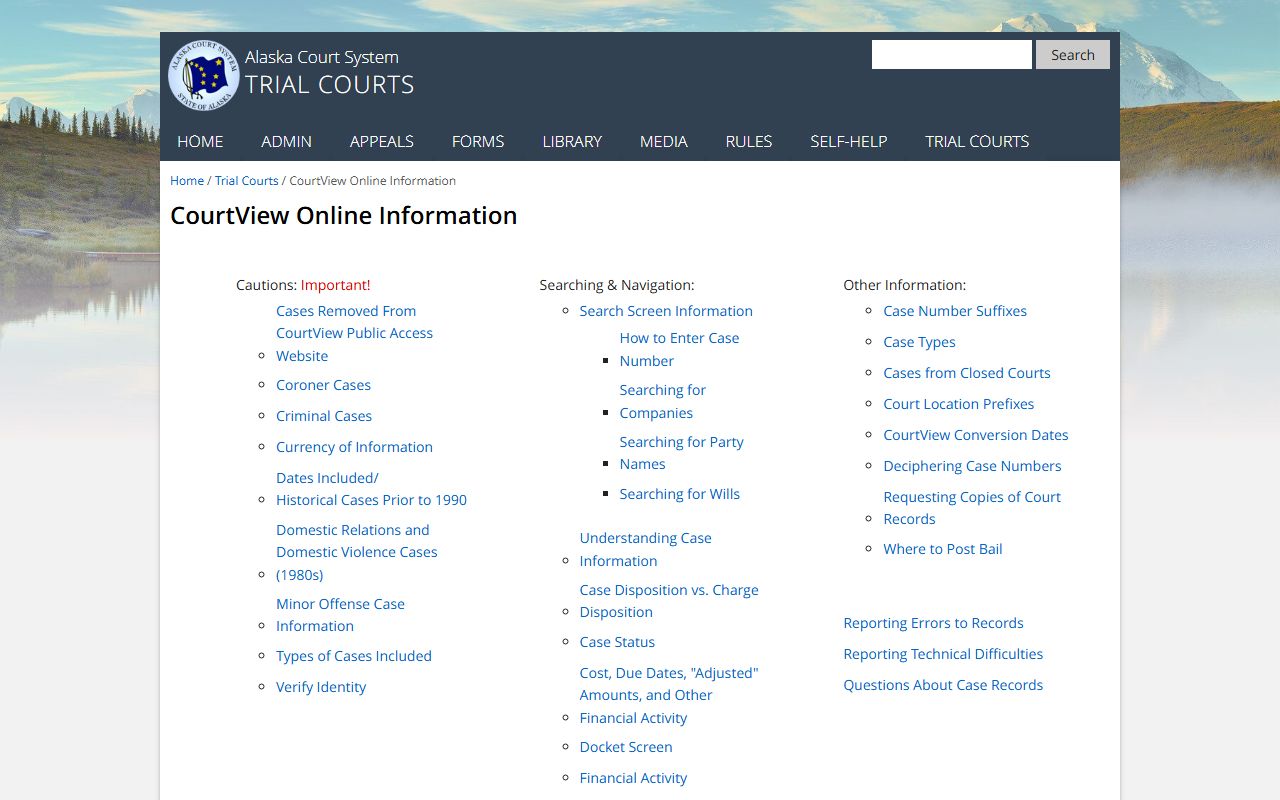
CourtView is a statewide name index of trial court cases filed with the Alaska Court System. The system is free and open to anyone. It shows case numbers, party names, general case type, and basic docket information. You search by full name, partial name, case number, or ticket number. CourtView does not include full document images, but it gives you enough to identify a case and find out where to request copies. Review the CourtView guide at courts.alaska.gov/trialcourts/cvinfo.htm before you start searching.
The CourtView Online Information Guide explains how case numbers work, what each search field does, and how to read the results you get back.
Alaska case numbers follow a standard format: a district prefix, the year filed, a sequence number, and a case type suffix such as CI for civil or PR for probate.
Case numbers follow a specific format. A number like 3PA-98-01234CI breaks down this way: "3PA" stands for Third Judicial District, Palmer. "98" is the year filed. "01234" is the five-digit sequence number. "CI" marks it as a civil case. Other suffixes you may see include CR for criminal, PR for probate, SC for small claims, and DV for domestic violence. Knowing this format helps when you have a partial number and need to search more precisely.
The system returns up to 500 records per search. For name searches, use a first initial and try several spellings. Company names should be searched in three ways: in the Company Name field, in the Last Name field, and in the First Name field. If a search returns too many results, narrow it by adding an approximate year. You can click any case number to view the docket entries and current status.
Note: A CourtView search is not a criminal history check. It shows case-level information only. For a complete state criminal history report, contact the Alaska Department of Public Safety at dps.alaska.gov.
Alaska's court system is organized into four judicial districts. The First District covers southeastern Alaska and is based in Juneau. The Second District covers northern Alaska from Barrow and Nome. The Third District covers southcentral Alaska from Anchorage. The Fourth District covers interior Alaska from Fairbanks. Each district has Superior Courts and District Courts. Superior Courts handle unlimited civil cases, felony criminal matters, domestic relations, probate, and juvenile cases. District Courts have limited civil jurisdiction and handle cases where the claim does not exceed $100,000 per defendant.
Superior Court judges are appointed through a merit selection process. The Alaska Judicial Council nominates candidates and the Governor appoints within 45 days. Judges serve the district where the Council determines they are needed. Court locations include Anchorage at 825 West 4th Avenue, Bethel at 204 Chief Eddie Hoffman Highway, Fairbanks at 101 Lacey Street, Juneau at 123 4th Street, and Kenai at 125 Trading Bay Drive, among others.
Alaska's Appellate Courts include the Alaska Supreme Court and the Court of Appeals. They hear appeals from civil cases decided in the trial courts. Supreme Court oral arguments are streamed live online and broadcast on Gavel Alaska cable systems statewide.
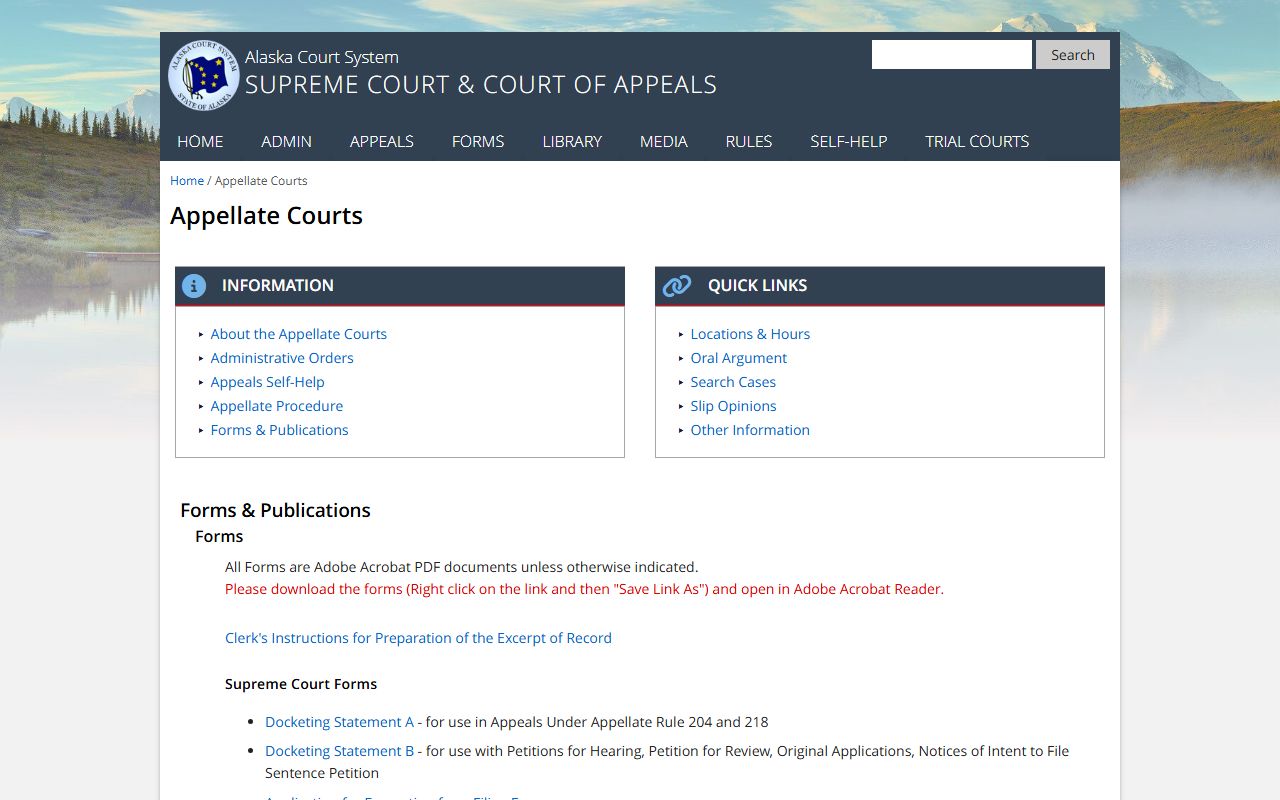
The clerk of the Appellate Courts is located at 303 K Street, Anchorage, AK 99501. Phone: 907-264-0608.
How to Request Copies of Civil Court Records in Alaska
The Alaska Trial Courts page on requesting copies lists all court-specific forms and explains the process for each court location across the state.
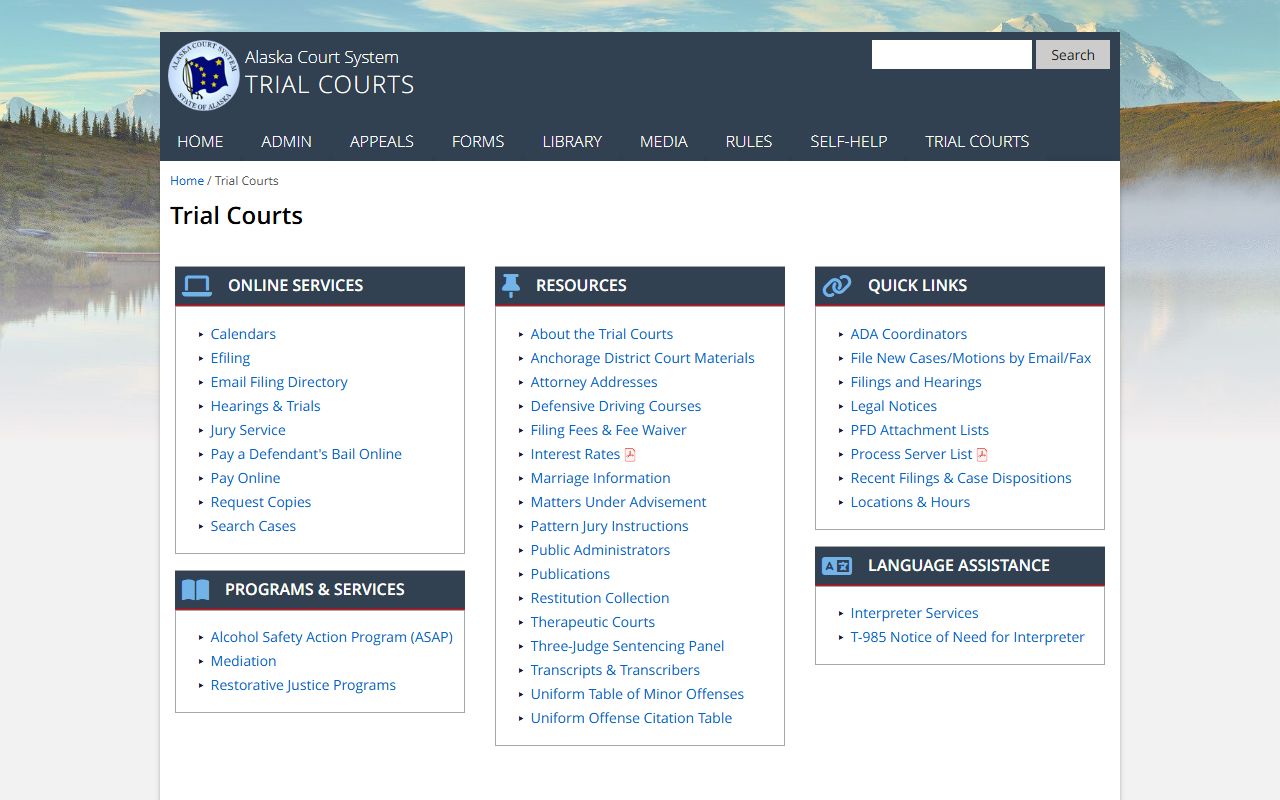
Requests can be submitted in person, by mail, by email, or by fax. Each court location uses a specific form depending on where the case was filed.
To get copies of Alaska civil court records, go to the clerk of court in the borough or census area where the case was filed. You can request records in person, by mail, by fax, or by email. Forms vary by location. Anchorage uses TF-311 ANCH. Fairbanks uses TF-311 FBKS. Palmer uses TF-311 PA. All other locations use the standard TF-311 form. Processing times differ. Anchorage and Palmer handle most requests within five to seven business days. Fairbanks has a four to six week wait for online requests, though in-person requests are handled the same day. The Valdez court is also running four to six weeks due to staffing levels.
Copy fees are set statewide. Plain copies cost $5 for the first document and $3 for each one after that in the same request. Certified copies run $10 for the first copy and $3 for each additional certified copy. Exemplified or authenticated copies cost $15 each. Audio recordings of hearings cost $20 per CD using the TF-304 form series. If the court needs to research a case and no case number is provided, there is a research fee of $30 per hour with a one-hour minimum charge.
Only the parties to a case may receive copies of confidential case files. You must show a photo ID to the court clerk when requesting confidential records. If you do not have a case number, search CourtView first to locate one. Having the case number eliminates the research fee entirely.
What Alaska Civil Court Records Contain
A civil case record in Alaska holds all the documents filed in connection with a lawsuit. The file starts with the complaint or petition that opened the case. It includes all answers and responses, motions filed by either side, court orders, and the final judgment or decree.
Online access through CourtView gives you the public summary. You can see the case filed date, the trial outcome, the nature of the case, and the presiding judge. Plaintiff and defendant names appear along with attorneys of record. The full document images with all sensitive data are not available online. Personal and financial information that could threaten security or privacy is automatically sealed or redacted. Certain records such as adoption files, juvenile delinquency cases, mental health commitment proceedings, and grand jury materials are not part of the public index at all.
The types of cases heard in Alaska civil courts include lien cases, breach of contract disputes, negligence claims, personal injury lawsuits, restraining order petitions, libel and slander cases, property condemnation disputes, and family-related cases. Each of these case types produces a distinct set of documents. The level of detail in any given file depends on how far the case went and how much was disputed before the final outcome.
Federal Civil Court Records Through PACER
PACER, the Public Access to Court Electronic Records system, provides public access to case filings from the U.S. District Court for the District of Alaska and the U.S. Bankruptcy Court for the District of Alaska.
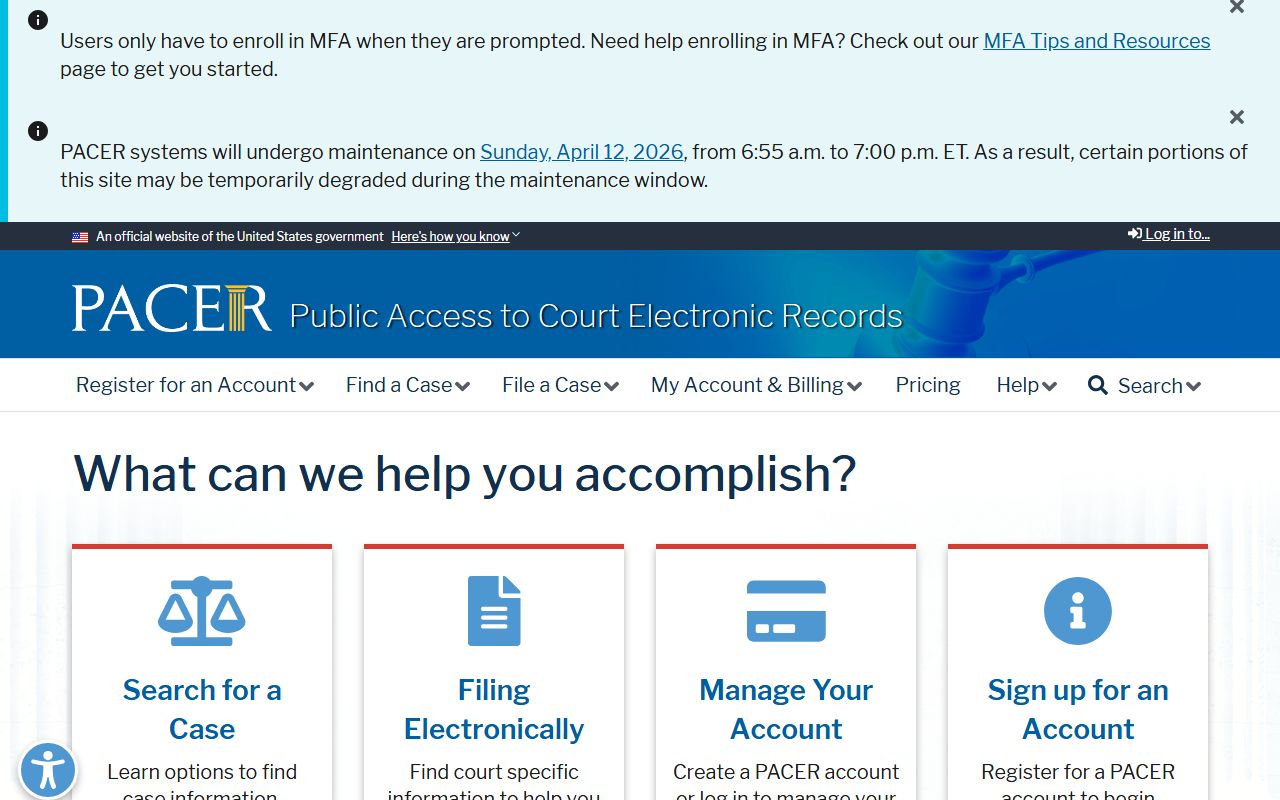
PACER charges $0.10 per page for document access with a $3.00 maximum per document. Registration is free. Public terminals at federal courthouses provide free access.
Federal civil cases go through the U.S. District Court for the District of Alaska (AKD). This court handles federal civil matters including civil rights cases, admiralty disputes, cases where parties are from different states and the claim exceeds $75,000, and matters arising under federal statutes. PACER lets you search case files, view party lists, review docket entries, and download documents. Register at pacer.gov. Alaska also has a U.S. Bankruptcy Court (AKBK) accessible through the same PACER system. Free access to both courts is available at public terminals in Alaska's federal courthouse buildings.
Alaska Public Records Law and Civil Court Access
The Alaska Public Records Act information page sets out the legal framework for accessing public records including court filings across all state agencies and the judiciary.
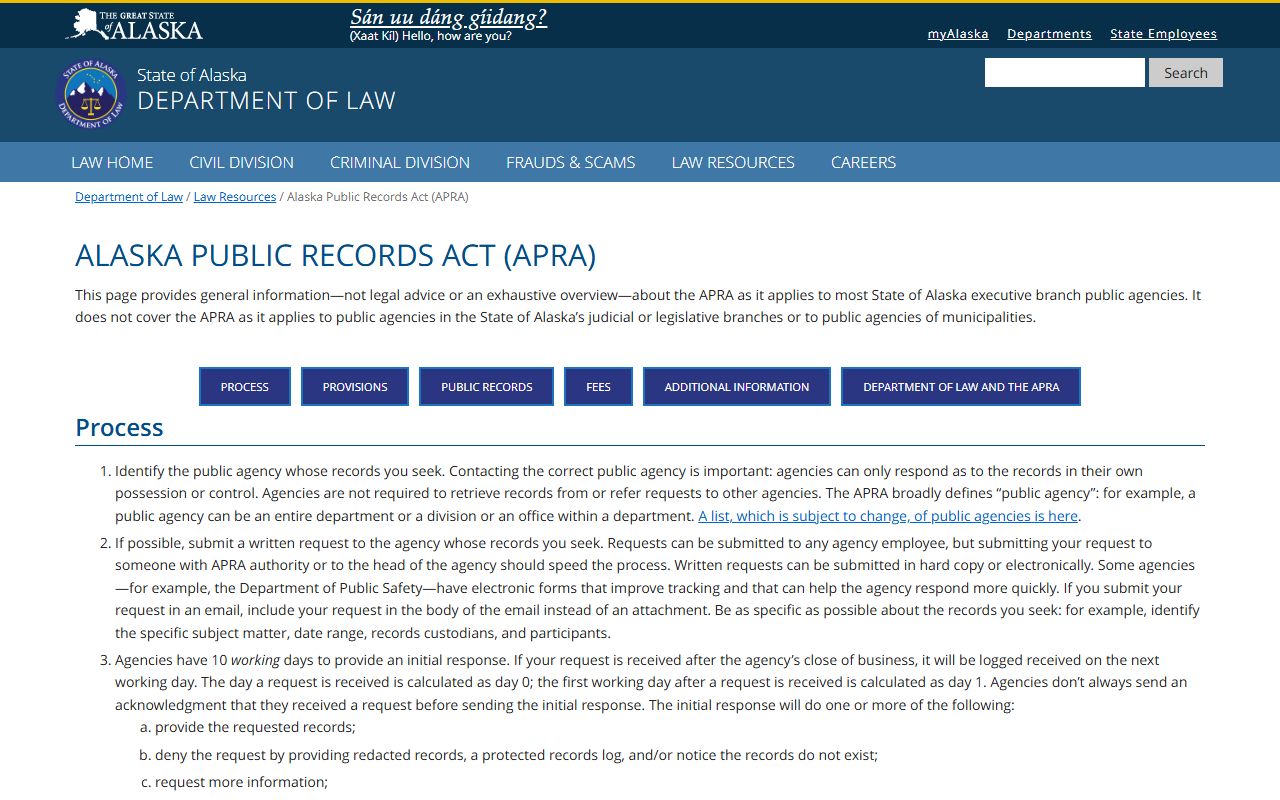
The Alaska Public Records Act, found at AS 40.25.100 through AS 40.25.295, gives every person the right to inspect public records held by state agencies and courts.
Alaska civil court records are public under state law. The Alaska Public Records Act (APRA), codified at AS 40.25.100 through AS 40.25.295, establishes the right of every person to inspect public records in the state. Court records fall under Administrative Rules 37.5 through 37.8, which govern access to judicial records specifically. The general rule is that court records are open to the public unless a specific statute, rule, or court order restricts access.
The Alaska Statutes public records section covers the specific provisions governing access requests, exemptions, and fee structures for all types of public records.
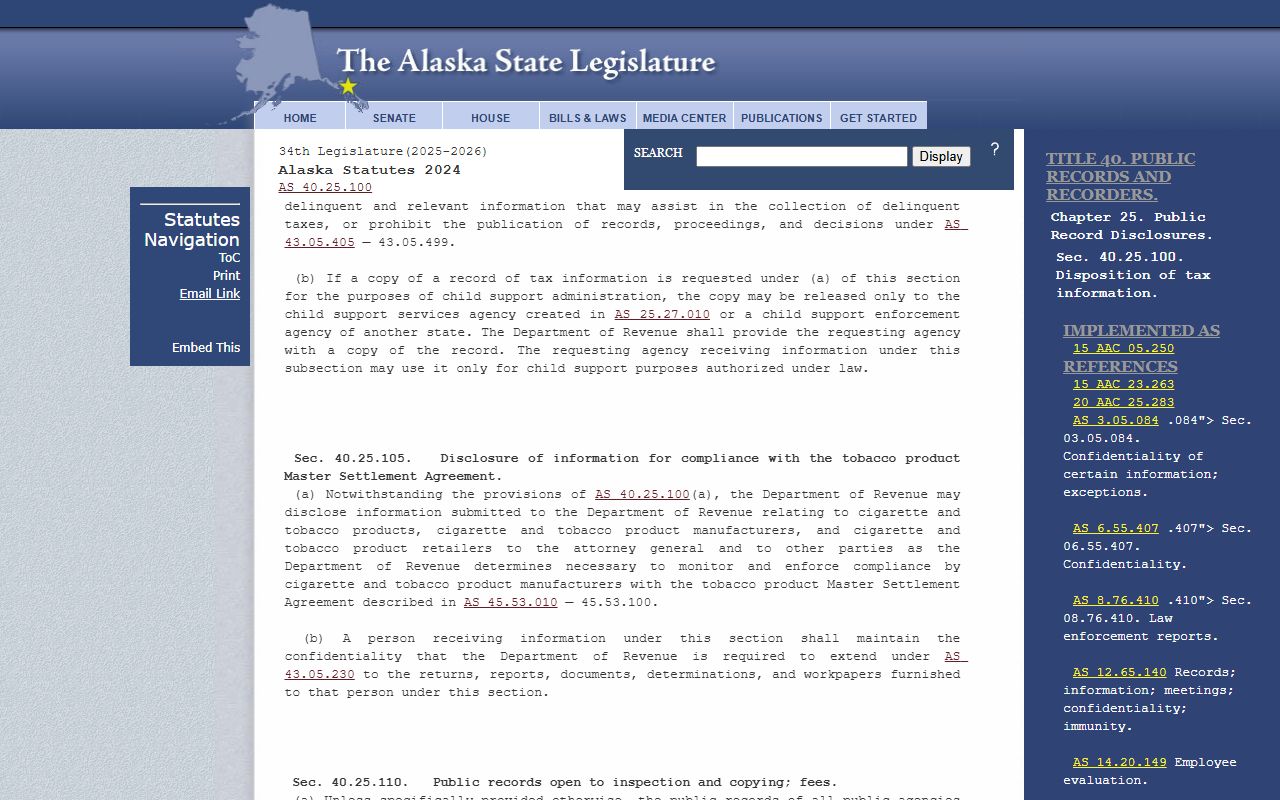
Key statutes include AS 40.25.110 on requests and fees, AS 40.25.120 on the right to inspect, and AS 40.25.125 on enforcement through injunction if a request is improperly denied.
Under AS 40.25.120, the right to inspect extends to any public record in the state. Exceptions include records declared confidential by state or federal law, records that would frustrate legitimate government functions if disclosed, and medical and public health records. For court cases specifically, sealed records, adoption records, juvenile records, grand jury proceedings, and mental health commitment records are not publicly accessible. If an agency denies a records request, you have appeal rights under AS 40.25.124 and enforcement options under AS 40.25.125.
Requests under the APRA are submitted in writing to the specific agency or court. Email is the preferred method, with the request in the body rather than as an attachment. Agencies have 10 working days for an initial response. If a request takes more than five person-hours to fulfill, the agency may charge its hourly rate for the time spent. Fee relief is available if the records are likely to contribute significantly to public understanding of government operations.
Browse Alaska Civil Court Records by Borough
Alaska is divided into boroughs, municipalities, and census areas rather than traditional counties. Each area is served by the Alaska Court System. Select a borough or census area below to find local court information, contact details, and civil records resources for that area.
View All 30 Alaska Boroughs and Census Areas
Civil Court Records in Alaska Cities
Major Alaska cities file civil cases through the borough or census area court that serves their region. Pick a city below to find courthouse contact info and civil court records resources for that area.